

This fall, the BIG EAST Conference announced the recipients of its 2025–2026 Team Academic Excellence Awards, presented annually to the team in each conference-sponsored sport that records the highest cumulative GPA. Among them were five of Butler’s programs—men’s basketball, softball, women’s soccer, women’s indoor track and field, and women’s outdoor track and field. Butler tied with St. John’s for the conference high.
This should come as no surprise as the Athletics Department also recently posted a spring 2026 3.57 cumulative GPA, its highest ever.
For the more than 400 Butler student-athletes, there is another team behind them—a powerhouse of academic professionals helping them navigate the demands of competing at the Division I level while earning their degrees and making their mark both on and off the court, field, track, course, or pool.
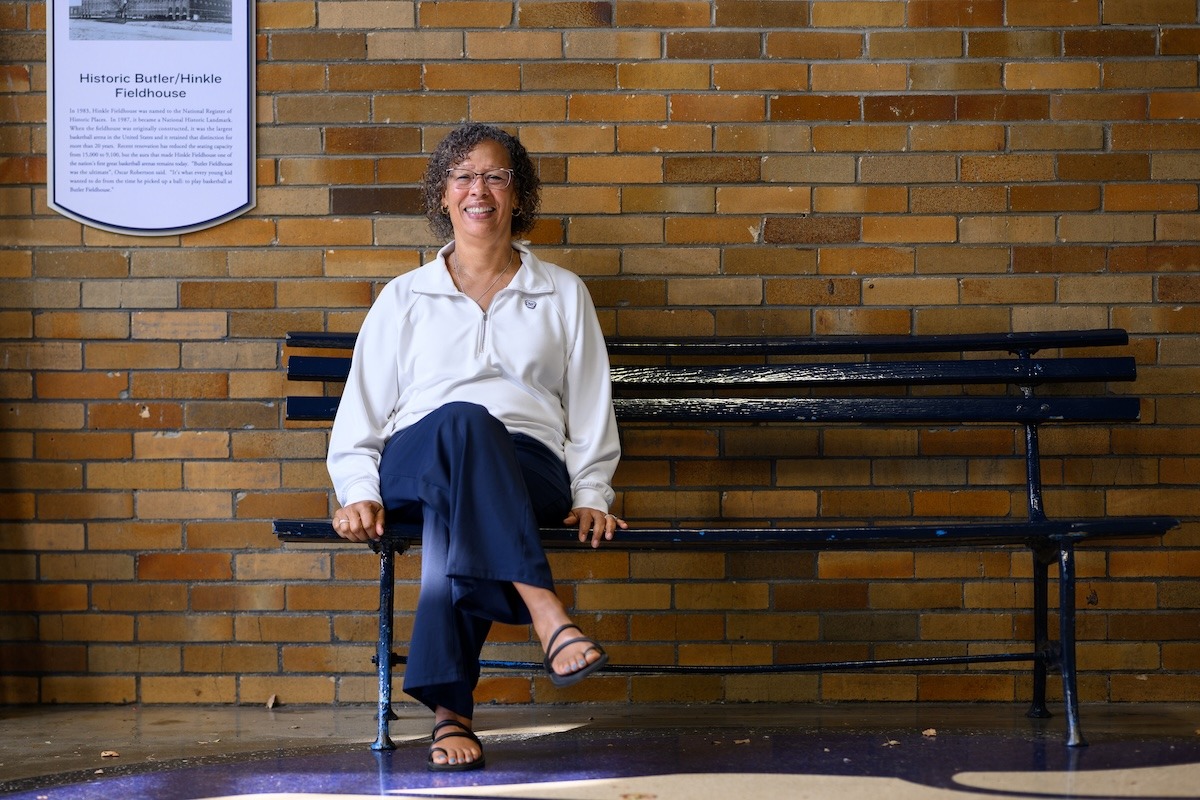
Sonya Hopkins, Associate Athletic Director for Academics (celebrating her 20th year at Butler), describes her team’s role simply: “We sit in the gap.”
That gap exists between student-athletes and their professors, coaches, schedules, and athletic responsibilities. While student-athletes are students first and must meet the same academic expectations as their peers, they also face additional NCAA requirements and the unique demands of collegiate competition.
“We’re really there to help them navigate all of those different pieces and make sure they’re able to manage the academic and athletic sides of their experience,” Hopkins says.
One of the primary ways that’s done is through the study-table program for first-year student-athletes. They use this time to identify upcoming assignments, papers, quizzes, and to complete specific academic goals.
The approach puts responsibility in the hands of the students.
“They know there is light at the end of the tunnel because they make the light at the end of the tunnel,” Hopkins says.
The goal isn’t simply to get students through a difficult class or maintain eligibility. It’s to help them develop the skills necessary to manage their responsibilities independently.
Eventually, Hopkins says, “You can tell when the light turns on.” Students become more confident and organized, learning how to identify pockets of time during their day and use them effectively.
The team also hires student tutors, works with campus academic advisors, and helps students navigate degree requirements, transfer credits, and course schedules. Just as importantly, Hopkins encourages student-athletes to become advocates for themselves.
“I do think our student-athletes become better advocates for themselves as they progress through Butler,” she says. “They understand the lay of the land, and they understand that communication is important.”
That growth is part of the larger value of being a student-athlete. The lessons extend well beyond grades.
“Asking for help is not a sign of weakness,” she says. “It’s a sign of, ‘I want to succeed, and if I don’t know how to do that, I will find out how to do that.’”
Those lessons—and the ability to communicate, manage time, work within a team, and navigate difficult conversations—can ultimately become some of the most valuable things a student-athlete takes into their life beyond Butler.
For Hopkins, however, the most rewarding part of the job is watching those lessons take hold.
“Definitely watching them graduate. That’s my favorite part,” she says. “Right alongside watching them graduate is watching them grow up.”
For Hopkins, the awards and GPA number represent more than academic accolades. They are reminders of what student-athletes and the people supporting them can accomplish: meeting high standards in two arenas at once. But even more than that, it’s about who they are as individuals apart from their sport.