

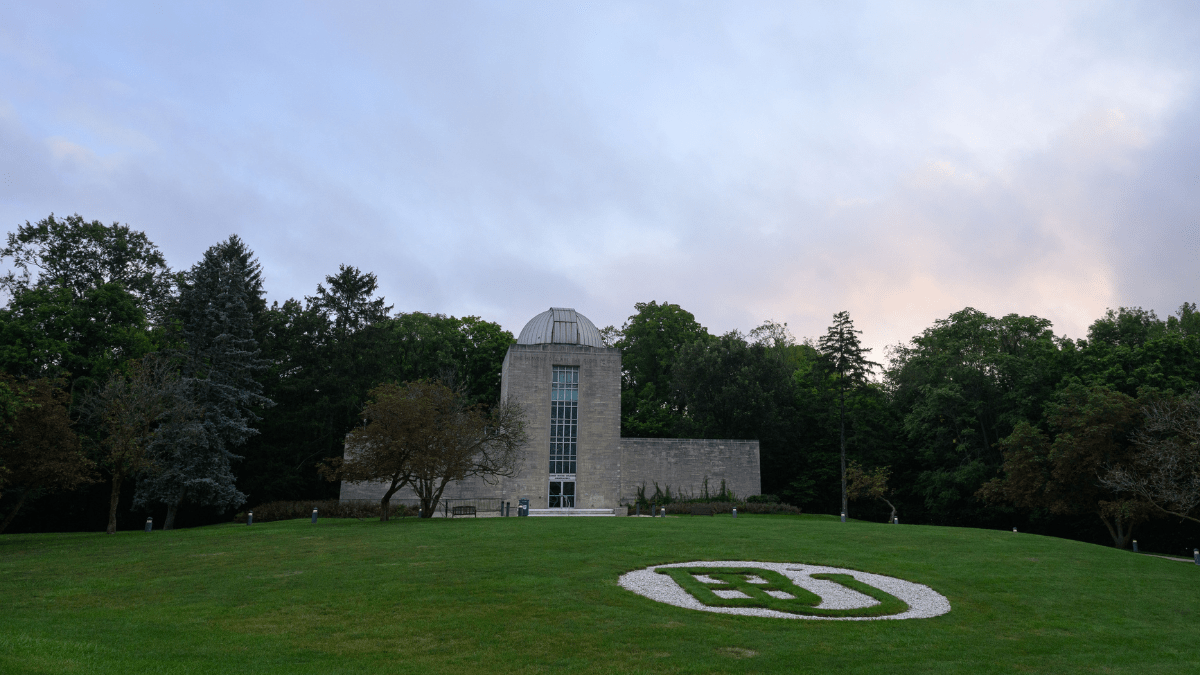
Butler University’s Holcomb Observatory and Planetarium has been officially welcomed as the newest member of the Alliance of Historic Observatories (AHO), an international network of institutions dedicated to preserving and advancing the legacy of historic observatories around the world.
The alliance brings together observatories that are more than 50 years old and that continue to play a role in research, preservation, and public education. Members include some of the most recognized observatories in the world, such as Griffith Observatory, Yerkes Observatory, and Mount Wilson Observatory, along with historic facilities across Europe and beyond—including observatories in Ireland, Ukraine, Vatican City, and South Africa.
According to the organization, the Alliance of Historic Observatories works to support professionals and institutions engaged in the conservation of historic astronomical instruments and buildings, research into the history of astronomy, the modern scientific use of heritage equipment, and public education in the sciences.
For Butler, the designation recognizes the historic and educational significance of Holcomb Observatory, which has served as a hub for astronomy education, public outreach, and scientific engagement for generations of students and visitors.
“Being welcomed into the Alliance of Historic Observatories connects Butler’s Holcomb Observatory with an international community committed to preserving and advancing the legacy of astronomy,” said Dr. Aarran Shaw, Assistant Professor of Astronomy and Director of the Holcomb Observatory and Planetarium. “It’s an exciting opportunity to share knowledge, collaborate with peer institutions, and continue inspiring curiosity about the universe.”
Holcomb Observatory has long been a distinctive feature of Butler’s campus, hosting public viewing nights, educational programs, and immersive planetarium experiences for the Indianapolis community. Membership in the Alliance of Historic Observatories underscores the observatory’s role not only as a teaching facility but also as part of a global network dedicated to preserving the history—and future—of astronomical discovery.