

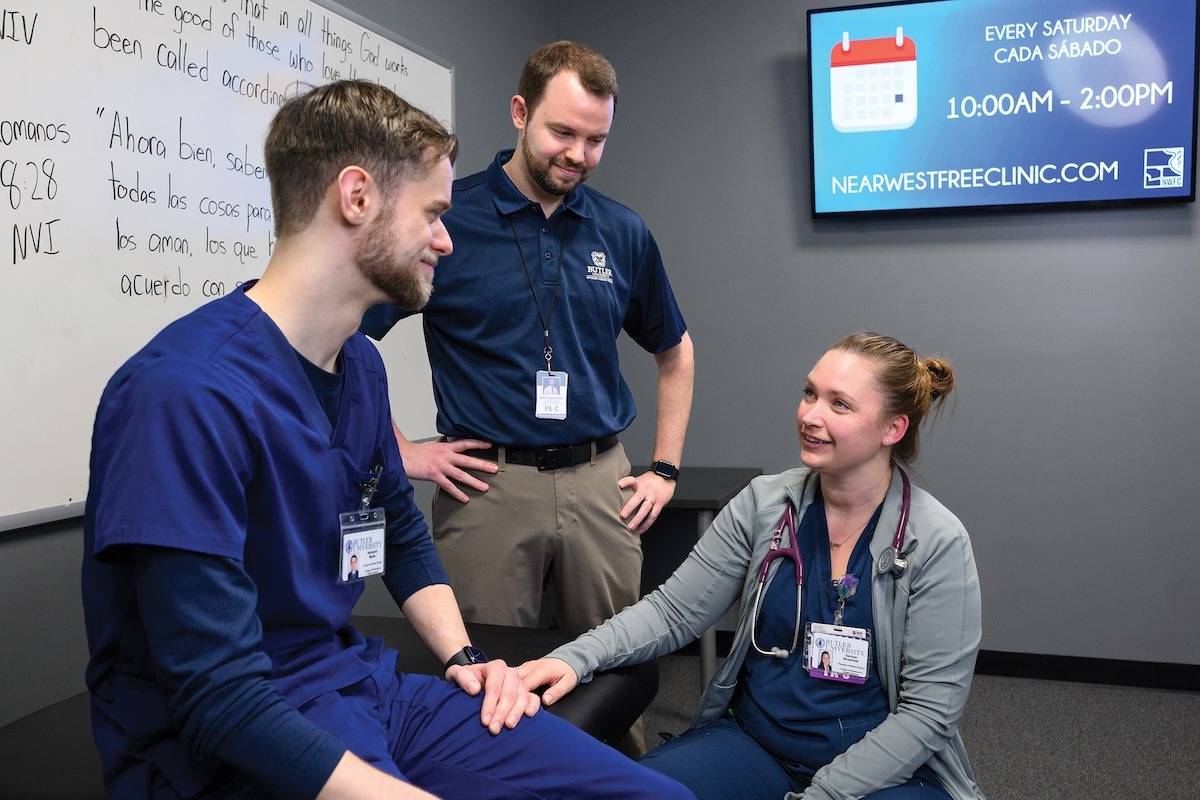
While volunteering at the Near West Free Clinic (NWFC)—a no-cost, student-run clinic serving Indianapolis’ underserved westside—a first-year Butler PA student noticed slight discoloration on a patient’s neck. Though the routine visit was for knee pain, her observation led to a diagnosis of seriously uncontrolled diabetes.
“If it wasn’t for the student actually thinking through a good physical exam and taking the extra time to connect with the patient, they never would have found it, since the patient didn’t want to seek care anywhere else,” says Kevin Bogenschutz ’17, the Clinical Director and Assistant Professor in Butler’s PA Program.
With medication, the patient’s symptoms improved quickly. She returned the next week with her family, and soon after, her neighbors. Stories like this unfold almost every week, Bogenschutz says.
Now, the clinic is poised to expand its impact after being awarded the nccPA Health Foundation EMPOWER Grant, which supports PA-led, grassroots interventions for underserved populations.
Bogenschutz co-wrote the proposal alongside Butler PA students and NWFC board representatives Sarinna Brueckner ’26 and Nate Marks ’26. Competing against more than 30 proposals—many submitted by professionals—the students secured funding for upgraded equipment, additional medications, and more.
“Writing the grant was a great experience,” says Brueckner. “It really gave us a more in-depth look into the Marion County population and its needs, which in turn helped to determine the best route to seek support through the EMPOWER Grant.”
NWFC serves neighborhoods disproportionately impacted by poverty, chronic disease, and lack of insurance. The clinic brings together Butler PA students, Butler undergraduates in healthcare disciplines and the Medical Spanish program, Marian University medical students, and community partners. Bogenschutz leads the clinic alongside Medical Director and supervising physician Dr. James Pike.
Established in 2018, it served more than 800 patients last year.
“I never get more hugs than I do from patients when I’m there on a Saturday,” Bogenschutz says. “They’re just truly grateful for the care. They’re uplifted. To be able to care for them while working with our team and teaching PA students at the same time … is such a fun experience while still making a big impact.”
Academically, he feels Butler’s expanding healthcare partnerships signal the University’s growing leadership in both clinical training and community health in Indianapolis.
For Brueckner, the interdisciplinary teamwork and patient relationships are why she loves to volunteer. As a second-year PA student, she values the chance to practice forming differential diagnoses, navigating language barriers, and collaborating with other healthcare professionals.
A report on student NWFC volunteers through the years found significantly improved performance, increased confidence, and even lower burnout despite working shifts of 6–8 hours on Saturdays. Students reported feeling more motivated after connecting with the why behind their chosen career path.
And Brueckner is no exception. Volunteering isn’t required, but even with her studies, rotations, and responsibilities on the NWFC board, she can’t stop showing up.
“It’s so rewarding when you get to see patients a few weeks or months down the road and they’re thankful for how much they’ve improved,” she says. “It makes them feel seen, heard, and cared for. There isn’t really a feeling like it.”